
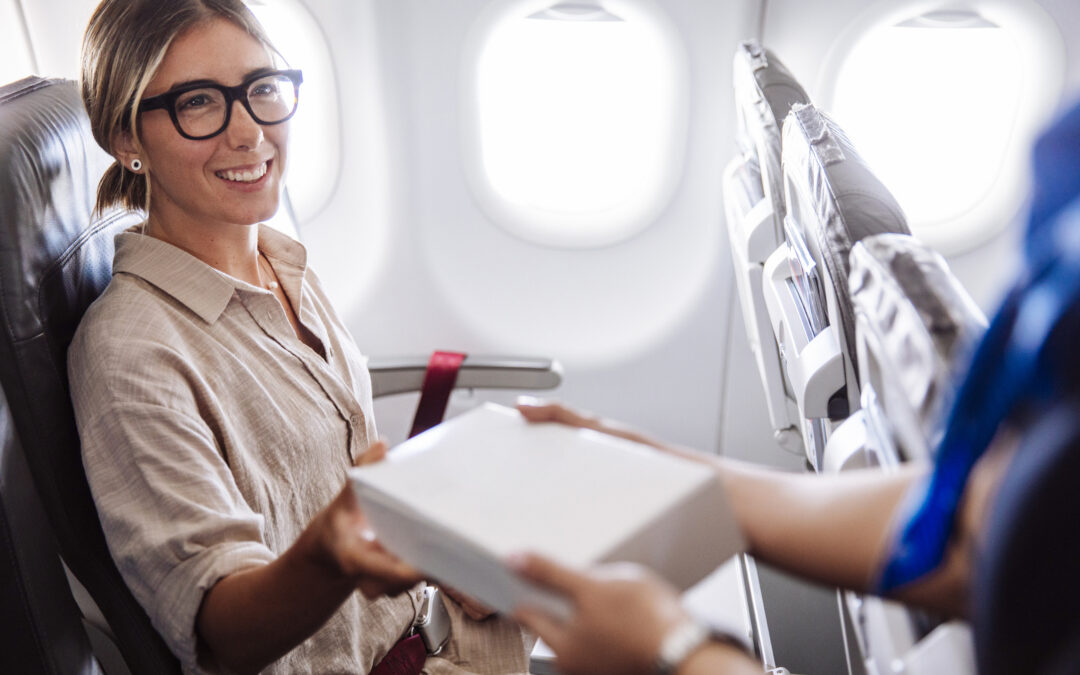
In-flight catering is food prepared by a caterer specifically for private, charter, or corporate flights and delivered to the aircraft before departure. Unlike commercial airline meals, private in-flight catering is ordered per flight, built around the passengers on board, and packaged so the flight crew can serve it easily in a small galley.
For passengers, it means a meal that feels like a restaurant experience in the air. For flight crews and schedulers, it means one less detail to worry about before wheels up.
Who Uses In-Flight Catering?
- Private jet owners and passengers who want quality meals on board
- Charter operators serving clients on business or leisure trips
- Corporate flight departments transporting executives and guests
- Flight attendants and pilots who coordinate meals for passengers and crew
- Schedulers and FBO staff who arrange catering on behalf of operators
How In-Flight Catering Works
- The order is placed. A passenger, flight attendant, scheduler, or FBO contacts the caterer with the flight details, passenger count, and menu requests.
- The menu is confirmed. The caterer reviews dietary needs, allergies, and any special requests, such as a favorite dish or a birthday dessert.
- The food is prepared. Meals are made fresh, close to departure time.
- It’s packaged for the aircraft. Food is packed in secure, labeled containers that fit galley storage. Hot items include reheating instructions.
- It’s delivered. The order is delivered to the FBO or directly to the aircraft before the flight. [Confirm which airports and FBOs Dining by Design serves, such as Springfield-Branson National Airport (SGF).]
How In-Flight Catering Differs From Event Catering
Catering for an aircraft brings challenges that a banquet hall never does.
- Limited galley space. Most private jets have small galleys with limited refrigeration and heating, so food must be packed compactly.
- Reheating, not cooking. Crews typically warm food in a convection oven or microwave, so dishes must hold up to reheating without drying out.
- No room for error. Once the aircraft is in the air, there’s no running back to the kitchen for a missing item.
- Precise timing. Delivery has to fit the departure schedule, which can change on short notice.
- Clear labeling. Every container needs contents, allergens, and handling instructions so the crew can serve confidently.
What Food Travels Best at Altitude?
Taste changes in the air. Dry cabin air and lower cabin pressure can dull the perception of salty and sweet flavors, so dishes that taste perfectly seasoned on the ground can taste flat on board. Good in-flight menus account for this.
Foods that tend to work well:
- Bold, savory flavors, including herbs, spices, and umami-rich ingredients like mushrooms, tomatoes, and aged cheeses
- Proteins that reheat well, such as braised meats, salmon, and chicken thighs
- Composed salads with dressing packed on the side
- Charcuterie, cheese boards, and fresh fruit platters
- Sandwiches and wraps on sturdy breads
- Desserts that travel well, such as cookies, bars, and individual cakes
Foods to avoid or plan carefully:
- Fried foods, which lose their crispness
- Delicate seafood that overcooks when reheated
- Very saucy or soupy dishes that can spill in turbulence
- Strong-smelling foods that linger in a small cabin
Food Safety in the Air
In-flight catering follows the same food safety principles as any catering, with extra attention to temperature control and timing. Meals should be chilled properly before delivery, labeled with prep times, and paired with clear storage and reheating instructions for the crew. Allergens should be clearly marked on every container. Read more about our standards in How We Handle Food Safety and Allergen Protocols.
Tips for Ordering In-Flight Catering
- Order early. Give your caterer as much notice as possible. [Confirm Dining by Design’s standard lead time and whether short-notice orders are available.]
- Share passenger details. Include headcount, dietary needs, allergies, and preferences.
- Include crew meals. Pilots and flight attendants need to eat too, and crew meals are easy to forget.
- Confirm aircraft details. Let your caterer know the aircraft type and galley equipment so food is packed and portioned correctly.
- Provide delivery details. Share the airport, FBO, tail number, and departure time.
Frequently Asked Questions
How far in advance should you order private jet catering? As early as possible, ideally at least 24 hours before departure. [Confirm Dining by Design’s preferred lead time.]
Can in-flight catering accommodate dietary restrictions? Yes. Private in-flight catering is ordered per flight, so menus can be built around allergies, gluten-free, vegetarian, and other dietary needs.
Who delivers the food to the plane? The caterer typically delivers to the FBO or directly to the aircraft, depending on the airport and operator.
Is in-flight catering only for long flights? No. Even short flights often include coffee service, snacks, fruit, or a light breakfast.
In-Flight Catering From Dining by Design
Dining by Design provides in-flight catering for private and charter flights departing from the Springfield area. Contact us to place an order or talk through a menu for your next flight.