
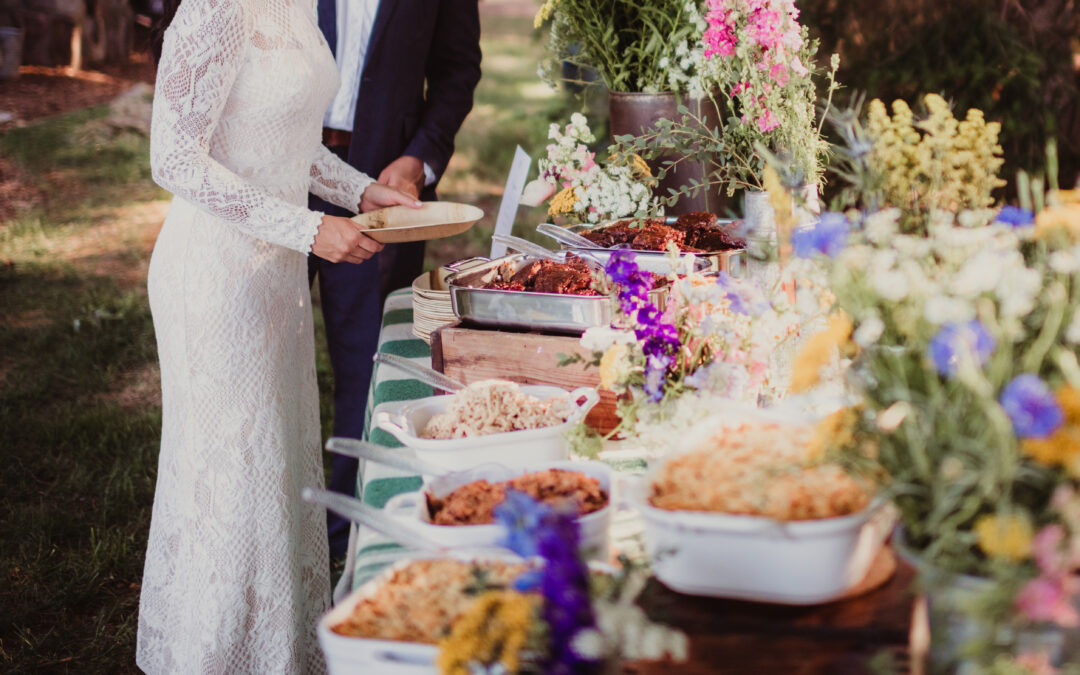
Choosing between an indoor and outdoor venue is one of the earliest decisions you’ll make when planning an event, and it affects almost everything that comes after it, including your catering plan. The food itself might stay similar, but how it gets prepped, served, and kept safe can look very different depending on where your guests are sitting. Here’s what actually changes when you move a menu from a ballroom to a backyard.
Kitchen Access and Prep Logistics
Indoor venues, especially event centers and hotels, often come with a working kitchen or at least a dedicated prep space close to the dining area. That makes plating, holding, and last minute touches much simpler for our team.
Outdoor events usually mean we’re bringing the kitchen with us. That can include portable ovens, warmers, mobile prep stations, and generators if the site doesn’t have reliable power. We plan our menu and equipment list around what a location can actually support, which is why a site visit before the event matters so much.
Weather Is Always Part of the Plan
Indoor catering removes weather from the equation almost entirely. Outdoor catering never does. Heat can affect how long food safely holds at temperature, wind can be a problem for open flame stations or lightweight décor, and rain means we need a backup plan for both the food and the guests.
For any outdoor event, we build in contingencies: tenting, shaded holding areas, and adjusted timing so food isn’t sitting out longer than it should in the heat.
Food Safety Looks Different Outside
Temperature control is one of the biggest differences between the two settings. Indoors, climate control does a lot of the work for us. Outdoors, especially in summer, we rely on additional equipment like extra chafing fuel, insulated transport, and more frequent temperature checks to keep hot food hot and cold food cold.
Pest control and coverage also become bigger considerations outdoors. Covered serving stations and quick service timing help keep food protected and guests comfortable.
Menu Choices Shift With the Setting
Some dishes simply travel and hold better than others. Outdoor events often lean toward menu items that are more forgiving in heat or cooler weather, like grilled proteins, sturdy salads, and desserts that won’t melt or wilt sitting on a table. Indoor events give us a bit more flexibility for delicate plated courses, since temperature and presentation are easier to control.
Setup and Service Style
Indoor venues typically have existing infrastructure, tables, flooring, and sometimes even linens and glassware, that speeds up setup. Outdoor events often start from a blank field or lawn, which means more time and more logistics: leveling surfaces, running power, and planning around uneven ground for service stations.
Service style can shift too. A plated dinner is easier to execute indoors with a controlled kitchen nearby. Outdoors, buffet or family style service sometimes makes more sense logistically, though we can execute a full plated experience outside when the site and timeline support it.
Frequently Asked Questions
Is outdoor catering more expensive than indoor catering?
It can be, mainly because of added equipment like tents, generators, and portable holding units. The venue itself, not the food, usually drives the cost difference.
Can every menu item be served outdoors?
Most can, but some dishes hold up better in heat or cooler temperatures than others. We’ll flag any items that need adjusting once we know your venue and season.
Do you bring your own equipment for outdoor events?
Yes. We bring portable prep and holding equipment as needed, and we scout the site in advance to confirm power, water access, and setup space.
What happens if the weather changes last minute?
We build a backup plan into every outdoor event, including tenting options and adjusted timing, so a sudden change in weather doesn’t put the food or your guests at risk.
Planning Your Venue and Menu Together
Neither setting is more or less “cateringfriendly,” they just require different planning. The key is matching your menu, equipment, and service style to the realities of your venue. That’s exactly what our team walks through with every client during the planning process, so whether your event is under a tent in a field or in a downtown ballroom, the food arrives exactly as it should.
Have a venue in mind and not sure what it means for your menu? Let’s talk it through.